



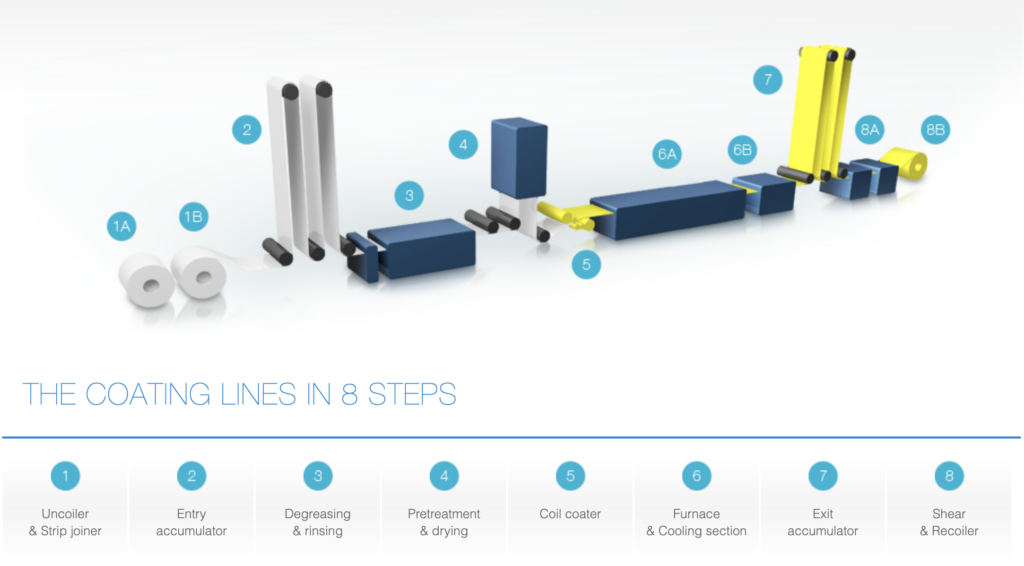
Efficient factory design plays a critical role in the performance, productivity, and safety of industrial coating operations. In metal processing industries, especially aluminum finishing, the arrangement of equipment, workflow direction, and space utilization directly influence production efficiency and operational costs. A well-planned layout ensures smooth material handling and minimizes unnecessary downtime.
A modern aluminum coil coating line requires careful integration of mechanical systems, chemical processing units, and thermal equipment. Proper factory layout planning ensures that each stage of production flows logically, reducing material waste and improving overall system coordination.
Importance of Factory Layout in Coil Coating Facilities
Factory layout is more than just arranging machines in a production hall. It determines how efficiently materials move through each stage of the coating process and how safely operators can work within the facility.
A well-designed layout helps achieve:
- Smooth and continuous production flow
- Reduced material handling time
- Improved safety conditions
- Better equipment accessibility for maintenance
Poor layout design, on the other hand, can lead to bottlenecks, inefficiencies, and increased operational costs.
Linear Production Flow Design
Most aluminum coil coating facilities adopt a linear layout to maintain continuous production. In this design, raw materials enter from one end of the facility and finished coils exit from the other.
The typical flow includes:
- Coil loading area
- Pretreatment and cleaning section
- Coating application zone
- Curing oven section
- Cooling and inspection area
- Recoiling and packaging zone
This straight-line configuration minimizes backtracking and ensures consistent production speed.
Space Allocation and Equipment Placement
Proper space planning is essential to accommodate large industrial equipment while maintaining safe working conditions. Each section of the coil coating line requires specific spacing based on operational needs.
Key considerations include:
- Sufficient clearance for coil handling equipment
- Safe distance between heating systems and chemical units
- Maintenance access around all machinery
- Storage space for raw and finished materials
Efficient space allocation reduces congestion and improves workflow efficiency.
Material Handling System Design
Material handling is a crucial component of factory layout planning. Aluminum coils are heavy and require specialized equipment for movement and loading.
Common handling systems include:
- Overhead cranes for coil transportation
- Automated loading and unloading systems
- Conveyor-based strip transfer systems
- Forklift-accessible storage zones
A well-designed handling system reduces manual labor and improves safety while ensuring smooth material flow.
Integration of Pretreatment and Coating Sections
The pretreatment and coating areas must be carefully positioned to ensure contamination-free processing. Since surface preparation directly affects coating quality, these sections are typically placed in controlled environments.
Important design factors include:
- Separation from dust and external contamination
- Proper drainage and wastewater management systems
- Controlled ventilation for chemical handling areas
- Easy transfer between cleaning and coating units
Proper integration ensures stable surface preparation and high-quality coating results.
Curing Oven Layout and Thermal Safety Considerations
Curing ovens require significant space and specialized safety measures due to high operating temperatures. Their placement within the factory layout is critical for both efficiency and safety.
Key design considerations include:
- Adequate ventilation and exhaust systems
- Fire safety clearance zones
- Heat insulation between adjacent sections
- Energy-efficient airflow design
Proper oven placement ensures stable thermal performance and reduces energy loss across the system.
Workflow Optimization and Production Efficiency
An efficient factory layout minimizes unnecessary movement and ensures that each stage of production flows seamlessly into the next. Workflow optimization is essential for achieving high productivity in continuous coating operations.
Optimization strategies include:
- Aligning equipment in logical process sequence
- Reducing material backtracking
- Balancing production speed across all sections
- Integrating automated control systems
These strategies help manufacturers maximize output while reducing operational inefficiencies.
Maintenance Access and Serviceability Planning
Maintenance accessibility is often overlooked during factory design but plays a crucial role in long-term operational efficiency. Equipment must be positioned in a way that allows easy inspection and servicing.
Important considerations include:
- Sufficient clearance around machines
- Easily accessible control panels
- Safe pathways for maintenance personnel
- Modular equipment installation for easier replacement
Good serviceability design reduces downtime and simplifies routine maintenance tasks.
Safety and Environmental Layout Planning
Safety is a top priority in industrial facility design. Coil coating operations involve chemicals, heat, and heavy machinery, all of which require controlled environments.
Safety-focused design elements include:
- Emergency exits and evacuation routes
- Fire suppression systems
- Proper ventilation for chemical areas
- Segregation of hazardous zones
Environmental planning also ensures compliance with regulations related to emissions, wastewater, and energy use.
Role of Automation in Factory Design
Modern coil coating facilities increasingly rely on automation to improve efficiency and reduce manual intervention. Automated systems influence layout planning by requiring integrated control rooms and sensor networks.
Automation benefits include:
- Centralized process monitoring
- Reduced human error
- Improved production consistency
- Real-time operational adjustments
Designing the factory around automation systems ensures better coordination and performance.
Conclusion
Factory layout and design are fundamental to the success of modern coil coating operations. A well-planned structure ensures efficient material flow, improved safety, and optimized production performance.
In a modern aluminum coil coating line, every component must be strategically positioned to support continuous operation and high-quality output. As manufacturing technologies continue to advance, intelligent factory design and automation integration will play an increasingly important role in improving efficiency, reducing costs, and enhancing overall industrial performance.
Table of Contents

