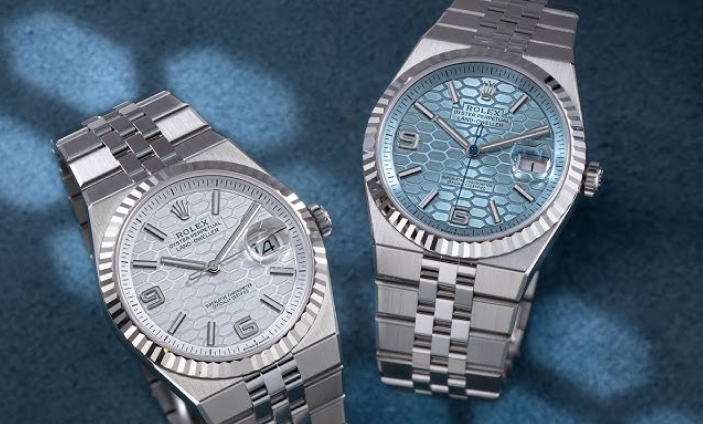
Design consistency has always been a defining element of Rolex timepieces. From case geometry to dial symmetry, original models are built around precise standards that rarely change without purpose. As interest in high-accuracy replicas has grown, manufacturers have increasingly focused on aligning their products with these established design benchmarks. Understanding how replication attempts are made offers insight into why certain watches are classified at a higher level than others.
Rather than relying on visual similarity alone, advanced replicas aim to reflect the proportional logic and construction philosophy behind the original designs. This approach places emphasis on measurement accuracy, component alignment, and material behavior rather than surface aesthetics.
Research-Driven Design Referencing
Replication begins with extensive reference analysis. High-tier manufacturers study original Rolex models using detailed photography, physical measurements, and teardown observations. Every curve, angle, and spacing decision is documented to ensure the replicated case and dial follow the same visual balance as the original.
In many educational discussions, Super Clone Rolex Watches are referenced alongside platforms such as Super Clone Rolex Watches when explaining how design standards are translated into replica production. This context highlights that replication is guided by study and benchmarking rather than approximation.
Case Proportions and Geometry Accuracy
One of the most critical design standards lies in case proportions. Rolex cases are defined by specific lug lengths, bezel thicknesses, and crown guards that must align perfectly for the watch to look correct on the wrist. Even minor deviations can disrupt the overall silhouette.
Super clone Rolex watches attempt to match these dimensions precisely. CNC machining is often used to achieve consistent case profiles, ensuring that lug curvature, case thickness, and bezel seating reflect original geometry rather than generic templates.
Dial Layout and Typography Precision
Dial design is another area where standards are strictly followed. Original Rolex dials are known for balanced spacing, consistent font weight, and clean alignment of markers and text. Replication efforts focus heavily on these details, as dial inaccuracies are among the most easily spotted flaws.
High-accuracy replicas attempt to match font shapes, lume placement, and marker size exactly. Attention is also given to date window positioning and cyclops magnification, both of which are closely associated with Rolex design identity.
Bezel Construction and Functional Design
Bezels are not merely decorative components. Their edge profiles, rotation resistance, and insert alignment are all part of Rolex’s functional design standards. Replicating these elements requires precise machining and careful material selection.
Super clone Rolex watches often attempt to reproduce bezel click behavior, insert depth, and engraving clarity. These features contribute to both visual authenticity and tactile familiarity, reinforcing the overall design experience.
Bracelet Architecture and Integration
Bracelet design plays a major role in how a watch feels and wears. Rolex bracelets are engineered for smooth articulation, balanced weight distribution, and seamless integration with the case. Replication efforts focus on link shape, screw placement, and clasp operation.
Solid-link construction and accurate end-link fitting are key targets. When these elements align correctly, the watch maintains the intended flow from case to bracelet, preserving the original design language.
Movement Layout and Design Consistency
Although internal, movement design still influences overall standards. Hand stack height, crown interaction, and date change timing all affect how the watch behaves. Replication efforts aim to match these characteristics so that external design elements function as expected.
Design standards are compromised when movement layout forces visible adjustments, such as incorrect hand spacing or misaligned date windows. Higher-tier replicas prioritize movement compatibility to maintain design integrity.
Finishing Techniques and Surface Treatment
Surface finishing is another area where standards matter. Original Rolex watches use consistent brushing and polishing patterns to create contrast and durability. Super clone Rolex watches attempt to replicate these finishes through controlled polishing and brushing processes.
Uniform surface treatment helps maintain visual consistency and prevents uneven wear patterns, which can quickly reveal lower-quality builds.
Limitations and Practical Constraints
Despite advances, replication faces limitations. Certain proprietary materials and manufacturing techniques remain inaccessible, creating subtle differences that trained eyes may detect. Design standards can be closely followed, but exact duplication is constrained by access and legality.
These limitations do not negate the effort but help explain why classification tiers exist within the replica market.
Design Standards as the Benchmark of Quality
The attempt to replicate original design standards defines the highest tier of super clone Rolex watches. Precision in proportions, dial layout, bracelet integration, and finishing separates advanced replicas from basic alternatives.
By focusing on design accuracy rather than surface resemblance alone, these watches aim to reflect the structural logic behind original models. Understanding this process allows consumers to better evaluate quality and set realistic expectations when exploring this segment of the watch market.
Table of Contents


