



Most photographers have a pretty fundamental know-how about lenses. But if that mm range revealed in your lens barrel remains a piece of a head-scratcher, it’s time for a crash path in focal period. Here’s everything you need to know all about.
What does the mm mean?
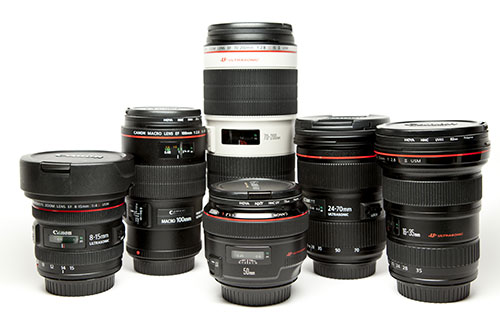
All lenses have an “mm” number published on them someplace. The short definition of mm is “focal length,” that is measured in millimeters. Some lenses have various focal lengths, inclusive of 18mm to 55mm, even as others have a unmarried, “constant” focal length.
We call variable focal period lenses “zoom” lenses, due to the fact you can “zoom” in or out to get towards a subject or in addition away. Fixed focal duration lenses are referred to as “prime.”
Prime lenses have only one mm designation for a simple reason: they don’t zoom. If you need to get closer or further out of your problem with a prime lens, you have to use your ft.
If you’re like many photographers, you don’t honestly spend a variety of time brooding about focal period, or considering how you may use it to improve your images.
Focal length falls into that realm of technical information, and lots of humans just don’t need to go there. But knowledge focal duration is critical to get the high-quality out of your lens.
Wide perspective and telephoto lenses
A huge attitude lens has a smaller focal duration, whilst a telephoto lens has a longer one. Most huge attitude lenses are 35mm or smaller. Telephoto lenses start at 70mm and cross up from there.
Wide angle lenses encompass more of a scene, whilst telephoto lenses include handiest a small part of a scene. You likely refer to this as “zoomed out” and “zoomed in,” respectively.
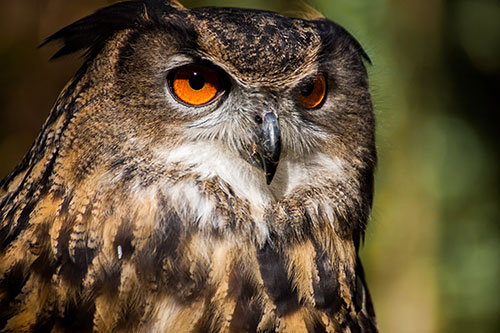
Different focal length lenses have distinct functions. If you’re taking pictures wildlife, for example, you need an extended focal duration lens (100mm is the minimum, however at the least 300mm is highest quality) so that you can get optically closer to your problem without worry of scaring it away.
If you’re shooting structure, then again, you would possibly need a wide perspective lens (35mm or smaller), due to the fact with a wide angle lens you can consist of all of your concern in a single shot without having to again up a quarter mile.
When to use a Wide Angle Lens
Because the gap between the lens and digicam sensor is lots shorter on a huge attitude lens, the lens itself needs to be wider that allows you to seize enough mild to make an exposure. So the peripheral imaginative and prescient of a extensive angle lens is broader, because of this it “sees” extra of what’s in a scene.
That way extensive attitude lenses are very well suited to any type of images where your intention is to photo something this is physically big, inclusive of that constructing we talked about in advance or a large, sweeping landscape.
My preferred use for my extensive attitude lens is form of the other of capturing huge sweeping landscapes or brilliant homes—I want to get without a doubt close to smaller topics.
This offers the item the illusion of being a lot deeper or longer than it in reality is. That can bring about a picture that appears both creepy or immersive, depending on the concern.
To make this paintings you have to pay close attention to focus—take into account that your lens can simplest focus to a positive point, so don’t get so close that your challenge blurs.
When to use a Telephoto Lens
Telephoto lenses are mainly accessible while you can’t get bodily close to your subject, but they’ve different makes use of as properly – portrait images, for instance. In reality my favored lens for shooting portraits is a 70mm.
Focal period is critical for portraits because lenses generally tend to motive distinctive sorts of distortion at unique focal lengths. A huge perspective lens may additionally exaggerate your situation’s capabilities, which makes it the incorrect preference for photos.
But at 70mm, your challenge’s functions begin to flatten out a little. That’s because the gap between, say, your concern’s nose and her cheekbones seems less at longer focal lengths.
So the ones longer focal lengths are sincerely flattering, due to the fact they are able to make capabilities look smaller. Once you get past 100mm, the effect starts offevolved to turn out to be a touch abnormal, and your challenge’s face will begin to appearance huge and sort of pancake like, that is much less flattering.
You can use this effect to optically decrease distances between items as well, and additionally to flatten functions of inanimate objects. It’s difficult to get your thoughts around what you may do with a telephoto lens until you in reality get available and begin experimenting,
so if you very own a lens with an extended focal period, I inspire you to spend an afternoon gambling round with it and comparing pics shot at exceptional focal lengths. Do this with your huge attitude lens, too.
The simplest way you can truly begin to get an amazing experience for focal period and the way it can alternate a scene is if you experience those differences to your very own paintings.
The Nerdy Definition
Now that we’ve delved into some of the makes use of for distinct focal lengths, let’s get into some of the nerdy technical stuff. Technically speakme, the focal length of a lens is the distance between the lens and the returned of the digicam, in which the picture is formed.
For instance, in a 55mm lens, there are fifty five millimeters among the lens and the digicam’s photo sensor. Now, that is in reality pretty meaningless records to you because the lens is housed in a defensive shell,
so that you couldn’t without a doubt measure that distance even in case you had a motive to (that you don’t). But that’s where that variety comes from.
There also are 55 millimeters between the lens and the spot in which light focuses in the front of the digicam. This works in a similar manner to the way that your eyes work. Try this: area your hand a foot far from your face and awareness on it along with your eyes till it appears crystal clean.
Now, slowly flow your hand in the direction of your face. Keep looking to recognition for your hand as you circulate it.
No matter how tough you attempt to maintain your hand in recognition, at a sure distance you simply won’t be able to do it anymore. When this happens, you’ve got handed the focus of your eyes.
Most human eyes focus at or near 50 millimeters, so meaning that the focus of your eyes is 50 millimeters far from your face.
But we’re now not nerds, we’re photographers!
Well, photographers form of are nerds, however that’s beside the factor. Anyway once you’ve absorbed the nerdy a part of this knowledge, you may use your greater trendy expertise approximately focal period to assist improve your pix. The secret’s to think about length and distance.
When you’re close, move wide. Use a wide attitude lens with a smaller mm focal duration like 18mm.
When you’re at a distance, go lengthy – a telephoto lens with a bigger mm focal length number like 200mm or 300mm.
And don’t forget to recollect perspective, too—use your understanding about focal period to visually exaggerate or reduce the distances among objects. It’s a type of magic, while you think about it.
Table of Contents

