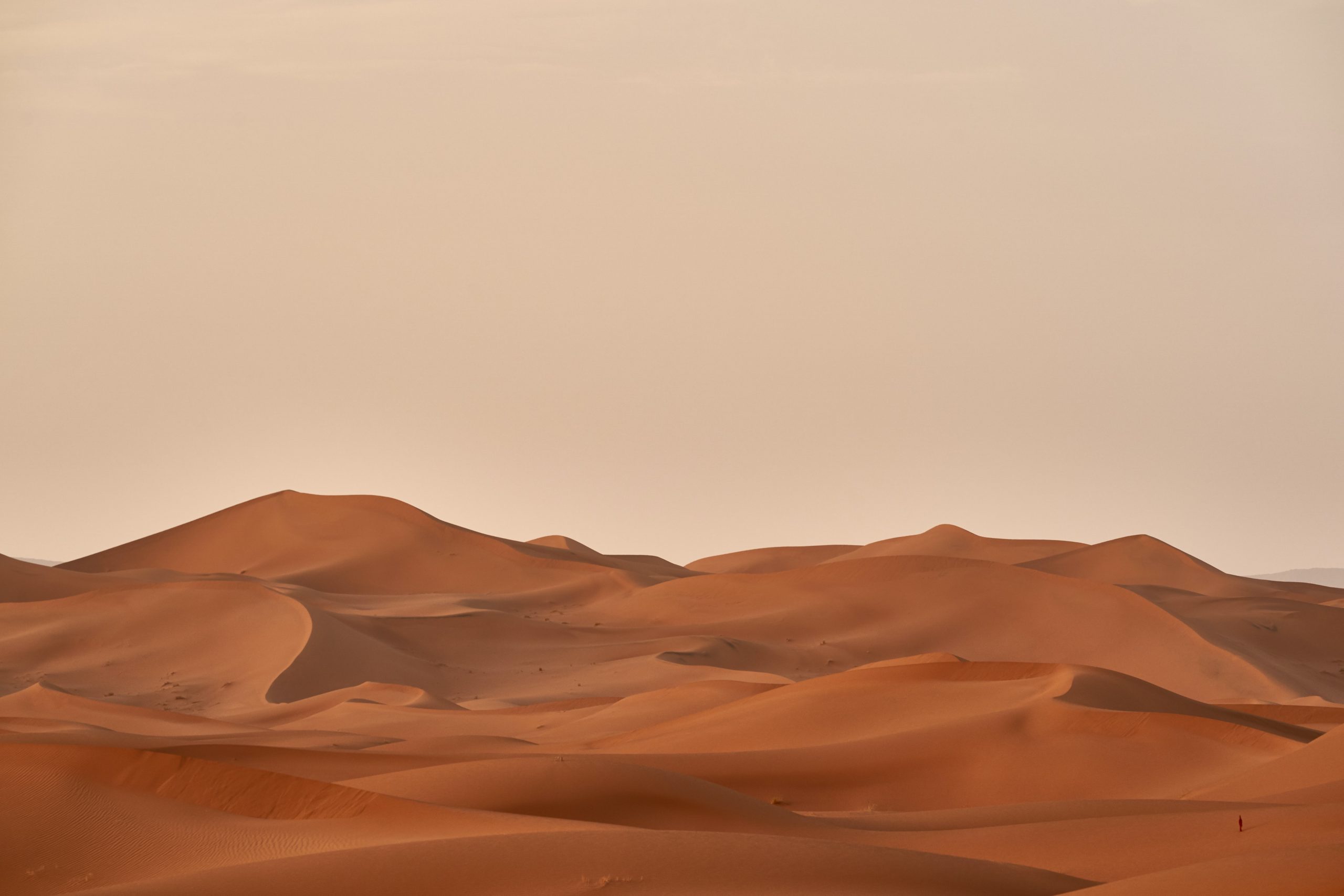
At more than 9 million square kilometers in size and covering the majority of North Africa, the largest desert in the world is the Sahara Desert by very some way.
Where does the word ‘desert’ come from?
The word ‘desert’ comes from the Latin expression desertum, which originally signified ‘an unwanted spot’.
In the English language, the word was historically used to imply an uninhabited area’, with no particular reference to the features of a desert.
For example, In The Winter’s Story, William Shakespeare set a scene in ‘Bohemia. A desert country close to the ocean refers to the scanty populace rather than the precipitation of that area. Isn’t so interesting?
The cutting-edge utilization of desert just completely showed up in our jargon in the 21st 100 years.
(Furthermore, obviously, it’s unrelated to dessert, even though both can give great joy!)
Covering roughly 33% of our planet’s land surface, deserts are a defining topographical peculiarity.
Here we investigate the 10 largest desert in the world, sharing their size, features, location, and the odd useful (and interesting!) truth.
What Is A Desert?
Deserts are defined as dry regions receiving under 12 inches of precipitation every year and are shaped when regional environment changes bring about long-lasting dry spell conditions.
In light of this setting, we should check out the 10 largest desert in the world.
1. Antarctic Desert
Area (km²): 14,000,000
Location: Antarctica
The Antarctic Desert is the largest desert in the world, covering all of the lands of Antarctica – the continent situated over the South Pole.
The area has a lot a greater number of exemplifications related to its name than the largest desert alone.
Antarctica is the coldest, driest, and windiest continent, and has the most noteworthy typical height of the multitude of continents in the world.
Antarctica gets yearly precipitation of only 20 mm, which happens just along the waterfront region.
The continent is excessively cold for rainfall, rather the drops of rain transform into little snowflakes and cover the external surface of the tremendous ice sheets.
2. Arctic Desert
Area (km²): 13,985,000
Location: Arctic Sea islands north of Norway and Russia
The chilly Arctic Desert is the second largest desert in the world, situated in the northern polar region of Earth.
The desert extends across an area of the Arctic Sea 2,000 km from east to west and 1,000 km from north to south, covering various island gatherings of the north shore of Norway and Russia.
The Arctic Desert notices very many environmental features as the Antarctic Desert, however, has a marginally higher precipitation pace of 50cm each year – roughly a similar sum as the Sahara.
3. Sahara Desert
Area (km²): 9,200,000
Location: North Africa
The Sahara or ‘the Greatest Desert’ is the largest hot desert in the world. In our best 10 lists, it is the third-largest desert in the world.
The Sahara Desert is situated in the northern piece of the African continent. All the more explicitly the Sahara covers portions of Algeria, Chad, Egypt, Libya, Mali, Mauritania, Morocco, Niger, Western Sahara, Sudan, and Tunisia.
It’s huge to such an extent that it covers 25% of Africa’s landmass.
The name ‘Sahara’ has come from the Arabic word for ‘desert’, çahra.
4. Australian Desert
Area (km²): 2,700,000
Location: Australia
The deserts of Australia (including the Great Victoria Desert) combine as the Australian Desert.
This fourth largest desert in the world, and the desert covers around 18% of the landmass of the Australian mainland.
Other than Antarctica, Australia is the driest continent in the world. Around 35% of the continent gets so little rain, it is nearly being classed as a desert.
The interesting point on Australia’s deserts is that in certain years they technically surpass how much rain edge to be known as a desert as rainfall distribution across the continent is so lopsided.
5. The Arabian Desert
Area (km²): 2,330,000
Location: Center East
The Arabian Desert is the fifth-largest desert in the world and the largest in Eurasia. It is situated in far Western Eurasia, in the Arabian Peninsula.
At the focal point of the Arabian Desert in Saudi Arabia, is one of the largest continuous assemblages of sand in the world, complete with picture-postcard sand ridges.
The spot is known as the Ar-Rub Al-Khali, otherwise called ‘The Vacant Quarter.
6. Gobi Desert
Area (km²): 1,295,000
Location: Eastern Asia
The Gobi Desert is an enormous desert region situated in East Asia, covering huge pieces of Northern China and Southern Mongolia.
It’s the second-largest desert in Asia and the third-largest virus desert on the planet.
The Gobi is what’s known as a rain shadow desert – a region that has been compelled to transform into a desert since mountains block all plant-growing, rainy weather.
Notwithstanding being a desert, the Gobi is popular for its interesting creatures like snow panthers and Bactrian camels.
7. Kalahari Desert
Area (km²): 900,000
Location: Southern Africa
The Kalahari Desert is the seventh-largest desert in the world. It is situated in Southern Africa, covering the vast majority of Botswana, also parts of Namibia, and South Africa.
The name of the desert has come from the Tswana word Kgala, meaning “the great thirst”. Its name mirrors the normal part of the region.
8. Patagonian Desert
Area (km²): 620,000
Location: Argentina
The Patagonian Desert or the Patagonian Steppe is the eighth-largest desert in the world and the largest desert in South America.
This whole region is a virus desert scour steppe, comprised of rough shrubland and thistle shrubbery and experiencing all-year ices and consistent winds.
Regardless of this, Patagonia is home to a variety of untamed life including foxes, llamas, and armadillos, and that’s just the beginning.
Read Also – vimala raman
9. Syrian Desert
Area (km²): 520,000
Location: Center East
The Syrian Desert or the Syrian Steppe is a subtropical desert that is the ninth-largest desert in the world.
The southern piece of the Syrian Desert converges with the bigger Arabian Desert. The surface of the desert is exposed and rough, and contains dispersed wadis or dry riverbeds.
10. Great Basin
Area (km²): 492,000
Location: US of America
The Great Basin Desert is set in focal west Nevada USA, between the Sierra Nevada and the Wasatch Mountains, and is the 10th largest desert in the world.
Along with its normal uniqueness, the desert is likewise well known for the Great Basin Public Park, situated in the focal piece of the desert.