



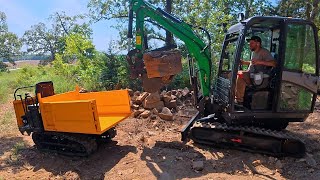
In construction, landscaping, and agricultural work, terrain conditions often determine how efficiently materials can be transported. Uneven ground, mud, gravel, and slopes can all create serious challenges for traditional wheeled equipment. This is where crawler-based machines offer a significant advantage, especially when stability and traction are essential for safe operation.
A modern mini crawler dumper relies heavily on its track system to perform effectively in demanding environments. The design of the tracks directly influences how weight is distributed, how traction is maintained, and how well the machine adapts to different surfaces. In fact, the performance of a mini crawler dumper is closely tied to the quality and engineering of its tracks.
How Crawler Tracks Improve Stability
Unlike wheeled machines that concentrate pressure on small contact points, crawler tracks spread the machine’s weight over a much larger surface area. This reduces ground pressure and helps prevent sinking into soft or unstable soil.
This design provides several stability benefits:
- Improved balance on uneven ground
- Reduced risk of tipping on slopes
- Better traction in muddy or loose soil
- Smoother movement over obstacles
By maintaining consistent contact with the ground, crawler tracks ensure that the dumper remains stable even under heavy loads.
Weight Distribution and Ground Pressure
One of the most important roles of crawler tracks is weight distribution. When carrying materials such as sand, gravel, or construction debris, uneven weight can cause instability in wheeled machines. Tracks solve this issue by spreading the load evenly.
This balanced distribution helps in:
- Minimizing soil damage on sensitive landscaping sites
- Preventing machine sinking in wet or soft terrain
- Enhancing load-carrying efficiency on unstable surfaces
Because of this, crawler dumpers are widely preferred in environments where preserving ground integrity is important.
Traction Performance on Different Surfaces
Traction is another critical advantage of crawler track systems. The continuous contact between the track and the ground allows the machine to maintain grip even in challenging conditions.
Crawler tracks perform especially well on:
- Muddy construction sites
- Gravel-covered paths
- Steep inclines and declines
- Uneven or rocky terrain
The textured surface of the tracks helps reduce slippage, allowing operators to maintain control even when conditions are far from ideal.
Impact on Maneuverability and Control
Track systems also enhance maneuverability, especially in confined or complex job sites. By controlling the speed of each track independently, operators can perform tight turns and precise movements.
This is particularly useful in:
- Narrow construction zones
- Urban landscaping projects
- Indoor renovation sites
- Areas with obstacles or restricted access
The improved control not only increases efficiency but also reduces the risk of accidents or damage to surrounding structures.
Durability and Wear Resistance
The durability of crawler tracks plays a major role in long-term machine performance. High-quality rubber or reinforced track materials are designed to withstand continuous friction, heavy loads, and harsh working environments.
Regular maintenance ensures:
- Extended track lifespan
- Reduced operational downtime
- Consistent performance under load
- Lower replacement costs over time
Operators should routinely inspect track tension, alignment, and surface wear to ensure optimal functionality.
Role of Tracks in Overall Machine Efficiency
The efficiency of a mini crawler dumper is not determined by engine power alone. The track system plays an equally important role in ensuring smooth and efficient operation across varying terrains.
Key efficiency benefits include:
- Reduced fuel consumption due to improved traction
- Faster transport across difficult terrain
- Fewer interruptions caused by slipping or getting stuck
- Greater productivity in demanding environments
When tracks function effectively, the entire machine operates more reliably and efficiently.
Conclusion
Crawler tracks are the foundation of stability, traction, and performance in modern mini dumpers. Their ability to distribute weight, enhance grip, and improve control makes them essential for working on rough or unpredictable terrain. By understanding how track systems contribute to overall machine behavior, operators can better appreciate their role in improving efficiency and safety on job sites.
For industries that regularly deal with challenging ground conditions, investing in equipment with well-designed crawler systems ensures smoother operations and more reliable material handling.
Table of Contents

