



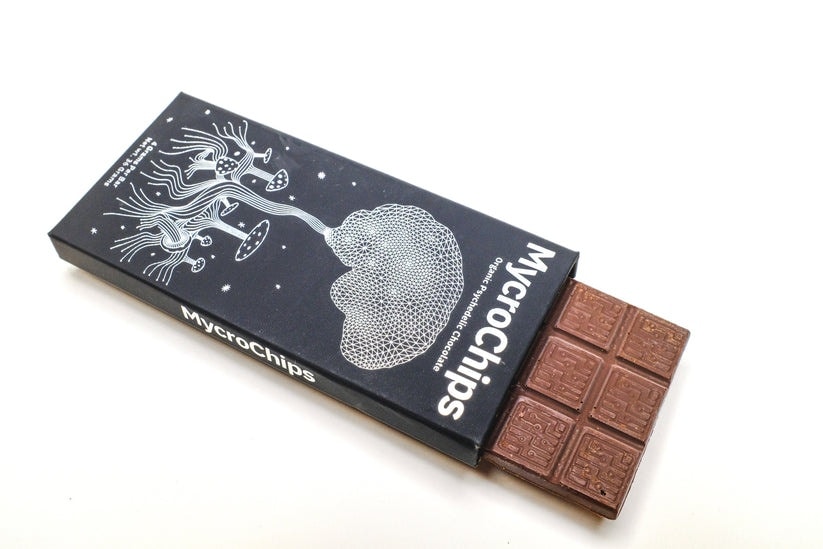
In the rapidly evolving landscape of functional foods, one company has emerged as a pioneer in manufacturing technology: Mycro Chips. This California-based enterprise has not only created a unique product line but has also developed proprietary manufacturing processes that are reshaping the functional food industry. This article delves into the technological innovations behind Mycro Chips’ production, exploring how their approach to manufacturing is setting new standards in quality control, efficiency, and scalability.
The Mycro Chips Manufacturing Revolution
At the heart of Mycro Chips’ success lies a series of innovative manufacturing techniques that combine traditional confectionery production with cutting-edge biotechnology. The company’s approach integrates several key technologies:
- Precision Fermentation
- Nanotechnology-Enhanced Extraction
- Controlled Environment Agriculture (CEA)
- Advanced Chocolate Tempering
- Artificial Intelligence-Driven Quality Control
Let’s explore each of these in detail.
1. Precision Fermentation
Mycro Chips has developed a proprietary fermentation process for cultivating their functional mushrooms. This process, which they term “Precision Mycelial Fermentation” (PMF), allows for:
- Consistent production of high-quality mushroom biomass
- Enhanced biosynthesis of target compounds
- Reduced cultivation time compared to traditional mushroom farming
The PMF system utilizes custom-designed bioreactors that maintain optimal conditions for mushroom mycelium growth. These bioreactors are equipped with sensors that monitor and adjust parameters such as temperature, pH, and nutrient levels in real-time, ensuring maximum yield and potency of desired compounds.
2. Nanotechnology-Enhanced Extraction
Once the mushroom biomass is produced, Mycro Chips employs a nanotechnology-enhanced extraction process to isolate and concentrate the functional compounds. This process involves:
- Use of food-grade nanoparticles to increase extraction efficiency
- Selective binding of target molecules for enhanced purity
- Preservation of heat-sensitive compounds through low-temperature processing
This nanoscale approach allows Mycro Chips to achieve higher potency in their final products while maintaining the delicate flavor profile of their chocolate base.
3. Controlled Environment Agriculture (CEA)
For mushroom species that cannot be efficiently produced through fermentation, Mycro Chips utilizes advanced CEA techniques. Their state-of-the-art vertical farming facility features:
- LED lighting systems with spectra optimized for each mushroom species
- Automated climate control for temperature, humidity, and CO2 levels
- Hydroponic and aeroponic systems for soil-free cultivation
This approach allows for year-round production of high-quality mushrooms, independent of external environmental factors.
4. Advanced Chocolate Tempering
Integrating functional mushroom extracts into chocolate presents unique challenges in maintaining proper crystalline structure. Mycro Chips has developed a modified tempering process that accounts for the presence of mushroom compounds. Their system includes:
- Precise temperature control at multiple stages
- Customized agitation patterns to ensure even distribution of extracts
- Rapid cooling techniques to lock in optimal crystal formation
This advanced tempering process ensures that Mycro Chips products maintain the desirable snap, gloss, and mouthfeel of premium chocolate while incorporating functional ingredients.
5. Artificial Intelligence-Driven Quality Control
To maintain consistency across batches and ensure product safety, Mycro Chips employs an AI-driven quality control system. This system incorporates:
- Computer vision for visual inspection of each product
- Spectroscopic analysis to verify chemical composition
- Machine learning algorithms to detect anomalies and predict potential issues
This AI oversight complements traditional quality control measures, allowing for unprecedented accuracy and efficiency in maintaining product standards.
Sustainability in Manufacturing
Mycro Chips’ innovative approach extends to sustainability in their manufacturing processes:
- Energy Efficiency: The company’s facilities utilize renewable energy sources and employ heat recovery systems to minimize energy waste.
- Water Conservation: Closed-loop water systems in their CEA and fermentation processes significantly reduce water consumption.
- Waste Reduction: Byproducts from mushroom cultivation are composted or repurposed, creating a near-zero waste production cycle.
Challenges and Future Developments
Despite their technological advancements, Mycro Chips faces several challenges:
- Regulatory Compliance: As pioneers in functional food manufacturing, the company must navigate evolving regulatory landscapes.
- Scalability: Maintaining product quality while scaling up production presents ongoing challenges.
- Consumer Education: Educating consumers about their advanced manufacturing processes and the benefits of their products requires ongoing effort.
Looking to the future, Mycro Chips is investing in several areas of research and development:
- Exploration of new functional mushroom species and their compounds
- Development of next-generation bioreactors for enhanced fermentation efficiency
- Investigation of biodegradable packaging solutions derived from mushroom mycelium
Impact on the Functional Food Industry
Mycro Chips’ manufacturing innovations are having a ripple effect across the functional food industry:
- Setting New Standards: Their high-tech approach is raising the bar for quality and consistency in functional foods.
- Inspiring Innovation: Competitors are investing in similar technologies to keep pace.
- Driving Research: The success of Mycro Chips is spurring increased research into fungal biotechnology and its applications in food production.
- Changing Consumer Expectations: As consumers become aware of these advanced manufacturing techniques, they’re demanding higher standards from all functional food products.
The Future of Functional Food Manufacturing
As Mycro Chips continues to push the boundaries of what’s possible in functional food production, we can anticipate several trends in the industry:
- Increased integration of biotechnology and food science
- Greater emphasis on precision and consistency in manufacturing
- More transparent production processes to meet consumer demand for information
- Continued focus on sustainability and eco-friendly manufacturing practices
Conclusion
Mycro Chips represents the vanguard of a new era in functional food manufacturing. By leveraging cutting-edge technologies and innovative processes, they’ve not only created a unique product line but have also set new standards for the entire industry. Their approach demonstrates how the intersection of biotechnology, food science, and advanced manufacturing techniques can yield products that are consistent, potent, and sustainable.
As consumers become increasingly interested in functional foods and their potential benefits, companies like Mycro Chips that can deliver high-quality, scientifically-produced products are likely to lead the market. The innovations pioneered by Mycro Chips may well become standard practice in the functional food industry of the future, ushering in a new age of precision, quality, and efficacy in nutritional products.
While challenges remain, particularly in terms of regulation and scaling, the path forged by Mycro Chips offers a glimpse into the future of food manufacturing – one where technology and nature work in harmony to produce foods that are not just consumables, but tools for enhancing human health and wellbeing.
Table of Contents

