



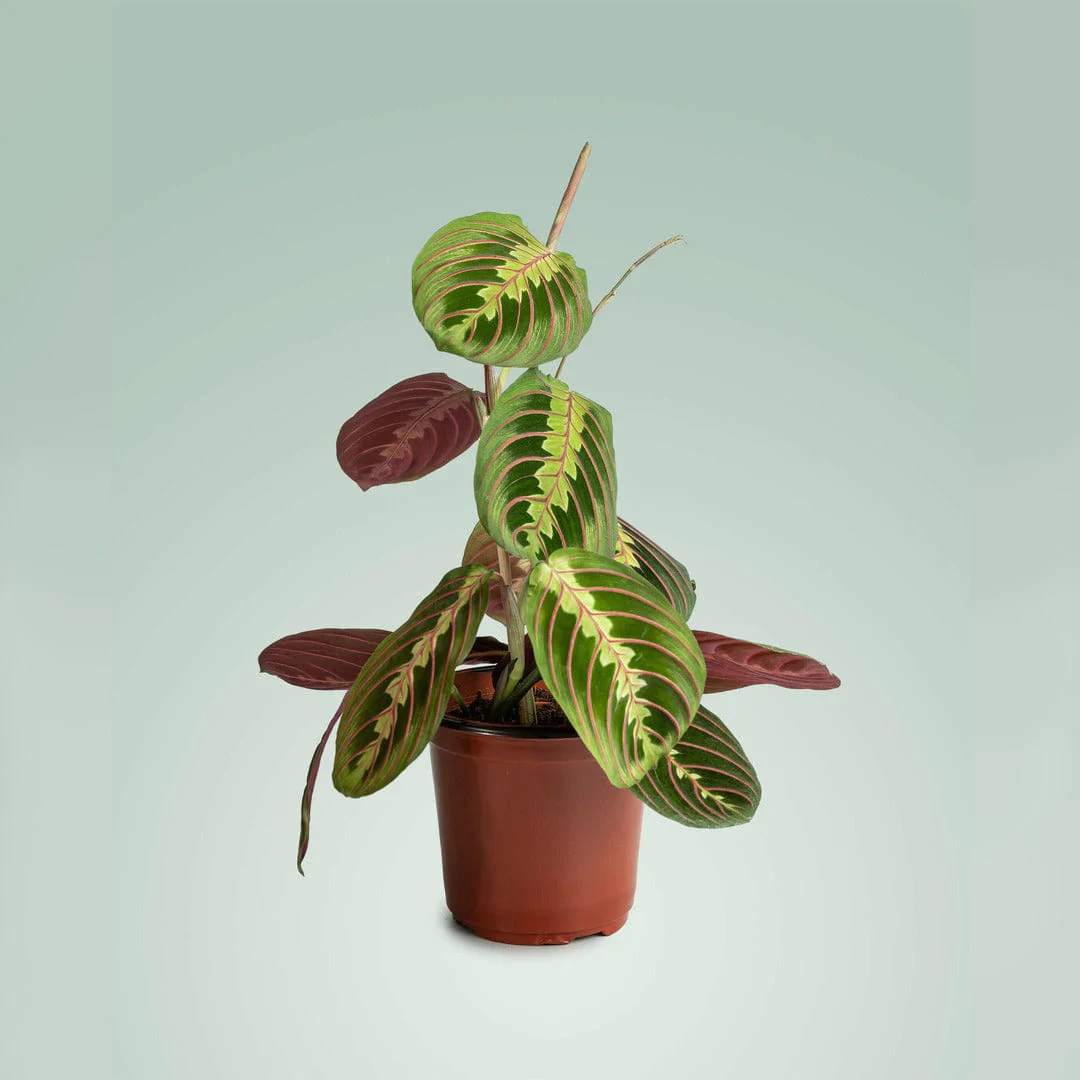
If you have ever been looking for an interesting and unique indoor plant to brighten up your home, the Maranta Leuconeura, commonly known as the prayer plant, is an excellent choice. With its striking foliage and vibrant colors, it is sure to be an eye-catching addition to any room.
However, as with any living thing, the Maranta Leuconeura requires attention and care in order to remain healthy and happy. In this comprehensive guide, we will discuss how to properly care for this plant so that it can thrive in your home for many years to come.
From watering and fertilizing to temperature, light, and soil requirements, all of your questions about the Maranta Leuconeura will be answered. So read on to learn how to give your prayer plant the best possible care!
Overview of the Maranta Leuconeura
First, let’s take a look at the Maranta Leuconeura. This plant is native to South America, where it grows in tropical and subtropical climates. The Maranta Leuconeura is a very easy-to-care-for indoor plant and is often recommended as an excellent starter plant for novice gardeners.
It has striking, green leaves that feature gold or silver veins, depending on the variety. The leaves are long and thin, and grow in a dense, upright clump. The plant features large, beautiful, trumpet-shaped flowers in bright red or orange.
You can keep the Maranta Leuconeura as a short houseplant or let it grow up to 6 feet tall and use it as a patio or garden plant. It is a great choice for growing indoors since it does not require a lot of sunlight and is very low maintenance.
Watering and Fertilizing Requirements
The most important part of caring for your Maranta Leuconeura is water. This plant does best when its soil is kept consistently moist, but not soggy. It is best to water your plant the moment you start to notice the topsoil beginning to dry out. If you let the soil become too dry, you risk damaging the roots.
Always water your Maranta Leuconea thoroughly, but do not leave excess water sitting in the bottom of the pot. If you are using tap water, your Maranta Leuconeura will appreciate if you give it a little time to sit and allow any chlorine to dissipate.
When it comes to fertilizing your prayer plant, there are a couple of different options. The first is to purchase a liquid fertilizer specifically formulated for houseplants. This is an easy and effective way to provide nutrients to your plant.
Another option is to use a slow-release fertilizer. This type of fertilizer is applied to the soil and slowly releases nutrients over a period of several weeks. Slow-release fertilizers are easy to apply and great for people who are new to gardening and may not be sure how much to fertilize their plants.
Temperature and Humidity Requirements
The Maranta Leuconeura prefers a warm, humid environment and does not do well in areas with low humidity. For best results, keep your plant in an area with a consistent temperature between 70 and 85 degrees.
An area that receives at least some indirect sunlight will help maintain the humidity levels in your home. If the air in your home is especially dry during the winter months, you may consider keeping a humidifier running in your home to help keep your plant comfortable.
You can also try misting your Maranta Leuconeura once a day to increase the humidity around it. Be sure to mist early in the day, as the moisture may cause your plant to rot if left on it throughout the night.
Light Requirements
If you are growing your Maranta Leuconeura indoors, it is best to keep it in a bright, sunny area. However, it is important to keep in mind that too much direct sunlight can be harmful to the leaves of the plant.
Keep in mind that the amount of light your plant receives is likely to change as it grows, so you may need to move it to a different location periodically as it matures. If your plant is receiving too little light, the leaves will become spindly and elongated.
If it is receiving too much light, the leaves will either wither and die or curl up and turn brown. This happens, you may need to move the plant to a shadier location or consider hanging a shade cloth over the plant to shield it from too much light.
Soil Requirements
When it comes to soil, the Maranta Leuconeura is fairly easy to please. It does best in a well-draining soil mix, but does not require the use of any special soil.
Well-draining soil is important so that your plant does not end up with root rot due to excess water retention. You will want to make sure that the soil you choose is gritty, as this will help prevent the growth of mold and bacteria.
Avoid using soil that contains peat, which can become soggy and lead to root rot. If you need to fertilize your soil, make sure to use a slow-release fertilizer. Also, be sure to thoroughly water your soil before and after adding fertilizer to prevent burning the roots.
Common Problems and Solutions
One of the most common problems associated with the Maranta Leuconeura is the tendency of the plant’s leaves to turn yellow and drop off. This is often due to too little light or too much water, so make sure to keep your plant in a bright area, but not in direct sunlight, and water it only when the soil is dry. If your leaves are curling or turning brown and falling off, this could be a sign of too much light or insufficient water.
Finally, if your leaves are shriveling, this is likely due to too little water in the soil. One way to help avoid these problems is to make sure to water your plant only when the topsoil is dry. Another is to spray the leaves of the plant with water once a week to increase the humidity around it and keep its roots from drying out.
Propagation Tips
If you would like to grow more Maranta Leuconeura plants from your existing plant, you can do so by taking a few simple steps. First, make sure that the plant is in good health, as new plant growth will not occur if the plant is experiencing any problems. Next, you will want to make sure that you have a rooting medium, such as vermiculite, coconut husk, or perlite.
Take a small branch with leaves on it and place it in the rooting medium, covering the stem with enough rooting medium to cover it completely. Be sure to keep your new plant in a warm, well-lit area free of direct sunlight. Keep the rooting medium moist and wait for new plant growth to form!
Tips for Encouraging Growth
If you would like to encourage your Maranta Leuconeura to grow more quickly, there are a couple of things that you can do. First, you can choose to fertilize your plant more frequently.
Keep in mind that this is not a good long-term solution, however, since over-fertilizing can damage and kill your plant. Another option is to pinch off the growing tips of your plant. This will cause new growth to start growing from the remaining stem, which will speed up the rate at which your plant grows.
Conclusion
The Maranta Leuconeura is a beautiful and extremely easy-to-care-for indoor plant. It thrives in warm, humid environments and prefers to be kept in a shaded area where the soil is kept consistently moist, but not soggy.
This plant appreciates a bright, sunny location, but should not be exposed to too much direct sunlight. It is best to use water that has been filtered or treated with a water softener.
It is best to fertilize your soil with a slow-release fertilizer and to water your soil before and after adding fertilizer to prevent burning the roots. If you are interested in growing your own Maranta Le
References:
1-The psychological benefits of indoor plants: A critical review of the experimental literature
https://doi.org/10.1016/j.jenvp.2009.05.001
2-Classification and geography of the flowering plants
https://doi.org/10.1007/BF02858611
Table of Contents

