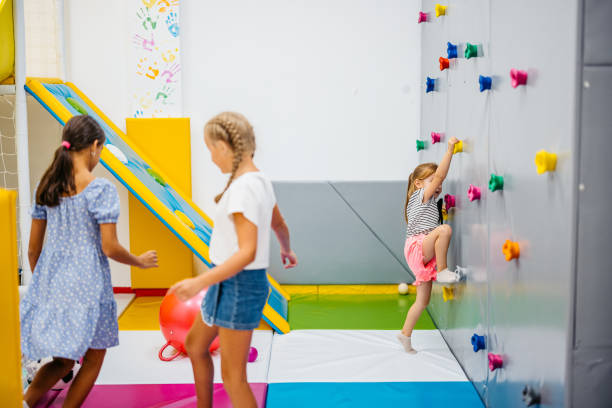
Movement is a cornerstone of early childhood development. From the moment a baby learns to crawl, their world expands, both physically and cognitively. In the Montessori approach to education, movement is regarded as essential for holistic growth, which is why Montessori climbing equipment like learning towers, climbing frames, and triangles play such a prominent role. These tools aren’t just toys—they’re foundational assets for developing motor skills, spatial awareness, and cognitive growth. In this article, we’ll explore the science behind these tools and explain how they contribute to children’s development in critical ways.
The Connection Between Movement and Brain Development
When young children engage in physical activities like climbing, they’re not only strengthening their bodies but also enhancing their brain development. The physical act of climbing stimulates various brain regions, encouraging connections that impact learning and emotional regulation. Studies on early brain development indicate that movement, especially activities that require coordination and balance, promotes neuroplasticity—the brain’s ability to form and reorganize connections. For instance, a 2014 study published in Frontiers in Psychology highlights that movement-based activities encourage the growth of neural pathways involved in problem-solving and memory.
Montessori toys Australia, including climbing equipment, allow children to engage in such movements, offering them an opportunity to control their own physical space and actions. For example, a Montessori climbing frame requires children to plan their movements, decide how to position their bodies, and solve minor physical challenges—such as how to climb up without falling. These small, seemingly simple actions foster independence and confidence while activating regions of the brain that are crucial for executive functioning.
How Motor Skills Develop Through Climbing
Gross motor skills, which involve large muscle groups in the arms, legs, and torso, are foundational to activities like running, jumping, and climbing. Climbing frames and triangles provide safe, structured ways for children to engage these muscles, building strength and coordination over time. Unlike smaller toys, these Montessori climbing frames encourage whole-body engagement, which is essential for muscle development and endurance.
By climbing, children also work on their fine motor skills. The act of gripping, holding, and balancing improves hand-eye coordination, grip strength, and dexterity. For example, learning towers, a popular Montessori toy in Australia, allow young children to safely reach counters and participate in everyday activities such as cooking. When children climb a learning tower to help with kitchen activities, they practice precision and control. Each time they reach for a spoon, or balance a small bowl, they’re refining their motor skills, which supports writing, drawing, and self-care tasks as they grow.
Learning Towers: More Than Just a Step Stool
Learning towers are more than a step stool—they’re a gateway to independent exploration. For young children, these towers enable participation in real-life tasks, aligning with the Montessori philosophy of letting children engage in the environment in meaningful ways. By enabling them to reach higher surfaces safely, learning towers empower children to help in the kitchen or participate in creative activities like painting. This opportunity for inclusion promotes self-confidence and a sense of contribution.
Research underscores the importance of active participation in daily routines. A study from Developmental Psychology found that when children are included in household activities, their cognitive abilities, language development, and social skills show significant improvement. Learning towers allow children to observe, mimic, and eventually master these daily skills, reinforcing their autonomy and providing a platform for hands-on learning.
Montessori Climbing Frames: Building Strength and Resilience
The Montessori climbing frame is a versatile piece of equipment that offers young children an ideal way to develop balance, strength, and resilience. Climbing requires focus, perseverance, and problem-solving—all valuable skills for a child’s development. When a child learns to climb the frame and navigate its structure, they build a sense of spatial awareness, understanding how their body moves and fits into different spaces.
These frames are particularly effective because they allow open-ended play. Instead of prescribing a specific way to climb or play, they encourage children to experiment and find their own way up or down. This freedom fosters creativity and decision-making, essential qualities that translate into other areas of learning. As children gain experience on climbing frames, they develop resilience and confidence—traits that are foundational to healthy emotional and cognitive growth.
Climbing Triangles: A Pathway to Independence
One of the most well-loved Montessori climbing toys in Australia is the climbing triangle, often referred to as a Pikler triangle. These triangles are specifically designed to promote safe exploration for toddlers and young children. Children use climbing triangles to practice standing, crawling, and balancing, which are early steps toward physical independence.
The simplicity of a climbing triangle might make it seem basic, but its effects on development are profound. As they climb, children engage their arms, legs, and core muscles, improving their physical strength and stability. At the same time, they’re developing cognitive skills as they experiment with movement and assess risk. Learning how to climb down teaches self-regulation and decision-making; children learn to take measured risks and understand their physical limits.
Studies on early childhood physical development support the role of climbing equipment in fostering self-efficacy. A 2019 study published in Child Development concluded that self-directed play in a safe, supportive environment encourages children to test their abilities, promoting a positive sense of self and improved risk assessment skills.
Conclusion: Movement Matters for Mind and Body
Incorporating climbing equipment like learning towers, climbing frames, and triangles into a child’s play environment offers more than just physical benefits. These Montessori toys promote cognitive growth, emotional resilience, and a sense of independence. Through climbing, children learn about their own abilities, build confidence, and experience the joy of self-directed learning. In essence, the Montessori climbing frame or climbing triangle is more than just play; it’s a tool that nurtures the mind and body simultaneously.
For parents and educators in Australia and beyond, integrating Montessori climbing equipment into playtime offers a valuable foundation for lifelong learning. Movement is a language of growth, and Montessori climbing toys provide the vocabulary children need to flourish in their own unique ways. By allowing children the freedom to climb, explore, and participate, we honor their natural drive to learn and give them a solid start on their journey of independence and discovery.
Table of Contents