



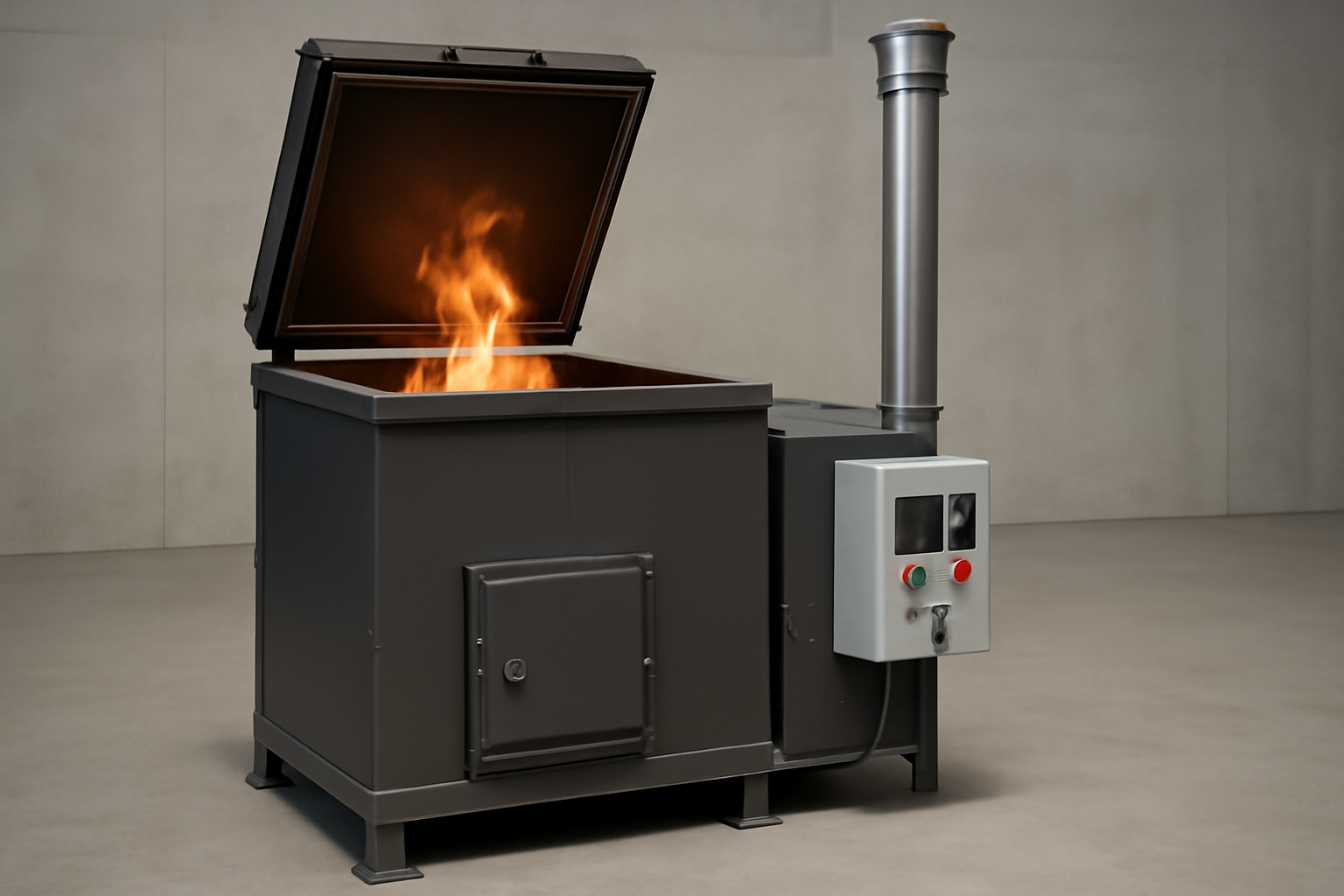
In industries and healthcare settings, effective waste management is crucial for ensuring safety, hygiene, and environmental responsibility. Among the various methods of waste disposal, portable incinerators have emerged as a top solution for handling waste in remote or limited-space environments. These versatile machines provide an efficient and environmentally responsible way to eliminate medical and industrial waste on-site. When considering a large portable incinerator, the focus is on powerful, durable units capable of handling a wide range of waste materials, from medical refuse to industrial by-products, with minimal environmental impact.
A large portable incinerator is designed to accommodate higher volumes of waste while maintaining efficiency in the incineration process. These units are commonly used in industrial and medical environments where waste production is significant and where it is not feasible to transport waste to centralized disposal facilities. Whether used for medical waste in hospitals, laboratories, or clinics or for industrial waste from manufacturing plants or research facilities, large portable incinerators offer a compact, mobile solution to waste management. They operate using advanced combustion technologies that burn waste at high temperatures, ensuring that harmful materials such as pathogens, chemicals, and plastics are effectively neutralized. These incinerators can often handle a range of waste, including non-hazardous and hazardous materials, with minimal emissions and pollutants.
For the medical field, portable incinerators are particularly valuable in locations where access to traditional waste disposal methods is limited or impractical. Hospitals, clinics, and laboratories produce large quantities of medical waste that need to be safely destroyed. This includes contaminated items like syringes, gloves, bandages, diagnostic materials, and, in some cases, physics instruments used in medical research. A portable incinerator for medical use is equipped to destroy these items safely, ensuring that biological, chemical, and radioactive materials are completely neutralized. This is especially important in remote locations or during emergencies where transporting waste is not feasible.
The versatility of portable incinerators also extends to their industrial applications. In industrial settings, waste can come in many forms, including plastics, rubber, chemicals, and metals. A large portable incinerator is capable of processing these materials, turning them into harmless gases or ash. This is a particularly valuable feature for factories and manufacturing plants that need to manage their by-products and avoid creating unnecessary waste that could harm the environment or become a hazard to public health. The ability to dispose of hazardous waste on-site reduces transportation costs and ensures that waste is safely handled in compliance with local environmental regulations.
Furthermore
The environmental aspect of portable incinerators cannot be overlooked. Many of the top-quality models on the market are designed to reduce harmful emissions and equipped with advanced filtration systems to capture particulates and gases such as dioxins, furans, and carbon monoxide. These environmental safeguards ensure that the incineration process doesn’t contribute excessively to air pollution, making portable incinerators a more sustainable choice compared to other waste disposal methods.
The portability of these incinerators makes them ideal for use in a variety of settings, including remote locations where waste disposal infrastructure may be lacking. Their compact design allows them to be transported easily between sites, whether used for a temporary event or as a long-term solution in an industrial or medical setting.
Conclusion
Top-quality portable incinerators are essential tools for safe and efficient waste disposal in medical and industrial environments. With their large capacity, advanced combustion technologies, and environmental safeguards, these incinerators help manage waste on-site, reduce transportation costs, and minimize environmental impact. Their versatility and reliability make them indispensable in both healthcare and industrial waste management.

