
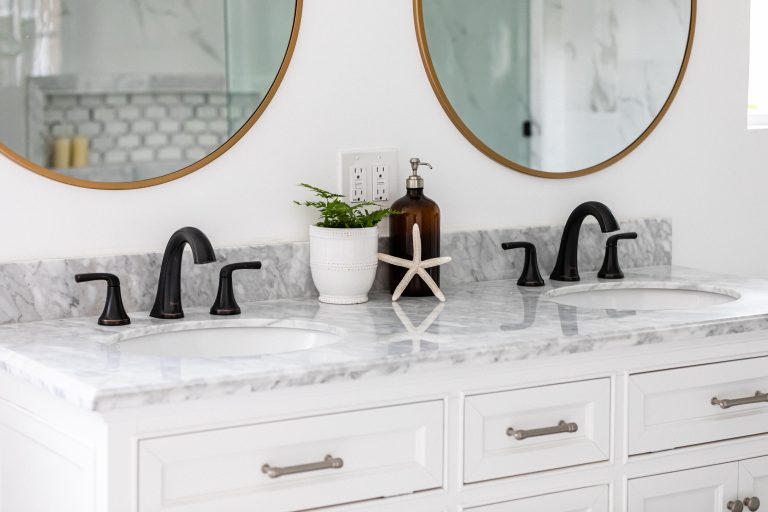
Cultured marble sinks are manufactured through a meticulous process that combines natural stone particles with resins to create durable and aesthetically pleasing bathroom fixtures. Here’s an overview of how cultured marble sinks are made:
1. Raw Materials Preparation
- Natural Stone Aggregates: The process begins with selecting high-quality natural stone aggregates, such as marble or limestone, which are finely crushed into specific particle sizes. These aggregates provide the desired texture and appearance to the final product.
- Polyester Resins: Polyester resins act as the binding agent that holds the stone particles together. These resins are carefully formulated to ensure strong adhesion and durability once cured.
- Pigments and Additives: Depending on the desired color and finish, pigments and additives may be added to the resin mixture. This customization allows for a wide range of color options, including marble-like veining and solid hues.
2. Mixing and Casting
- Mixing: The crushed stone aggregates and resin mixture are thoroughly blended together in precise proportions. This mixing process ensures uniform distribution of the stone particles throughout the resin matrix.
- Casting: Once mixed, the cultured marble slurry is poured into molds that are shaped according to the desired sink design. Molds can vary in size and configuration to produce different sink styles, including undermount, drop-in, and vessel sinks.
3. Curing and Hardening
- Curing Process: The filled molds are transferred to a curing chamber where the cultured marble slurry undergoes a chemical curing process. This curing process allows the polyester resins to harden and bond with the stone aggregates, forming a solid and resilient material.
- Temperature and Time: Controlled temperature and humidity levels are maintained during curing to ensure optimal curing times and to prevent defects in the finished sinks.
4. Demolding and Finishing
- Demolding: Once cured, the hardened cultured marble sinks are carefully removed from their molds. Precision demolding techniques ensure that the sinks retain their intended shape and surface finish.
- Trimming and Shaping: Any excess material or imperfections are trimmed and shaped using specialized tools and techniques. This step ensures that the sinks meet quality standards and specifications for size, shape, and surface smoothness.
5. Polishing and Surface Treatment
- Surface Polishing: Cultured marble sinks undergo polishing to achieve a smooth and lustrous finish. Polishing enhances the visual appeal of the sinks and provides a protective layer against stains and scratches.
- Optional Surface Treatments: Depending on the manufacturer and sink design, additional surface treatments such as sealing or applying protective coatings may be applied to further enhance durability and ease of maintenance.
6. Quality Inspection and Packaging
- Quality Control: Each cultured marble sink undergoes rigorous quality inspection to ensure that it meets industry standards for strength, durability, and aesthetic appearance. Inspections may include visual checks, dimensional measurements, and performance tests.
- Packaging: Once approved, the cultured marble sinks are carefully packaged for shipment to distributors, retailers, or directly to consumers. Protective packaging materials ensure that the sinks arrive in pristine condition and ready for installation.
Conclusion
The manufacturing process of cultured marble sinks combines advanced technology with craftsmanship to produce high-quality bathroom fixtures that are durable, aesthetically pleasing, and versatile in design. From raw materials preparation to final finishing touches, each step in the process contributes to creating sinks that enhance bathroom aesthetics while offering long-lasting performance and ease of maintenance. Understanding this process provides insight into the craftsmanship and attention to detail involved in producing cultured marble sinks for modern residential and commercial applications.
Table of Contents