



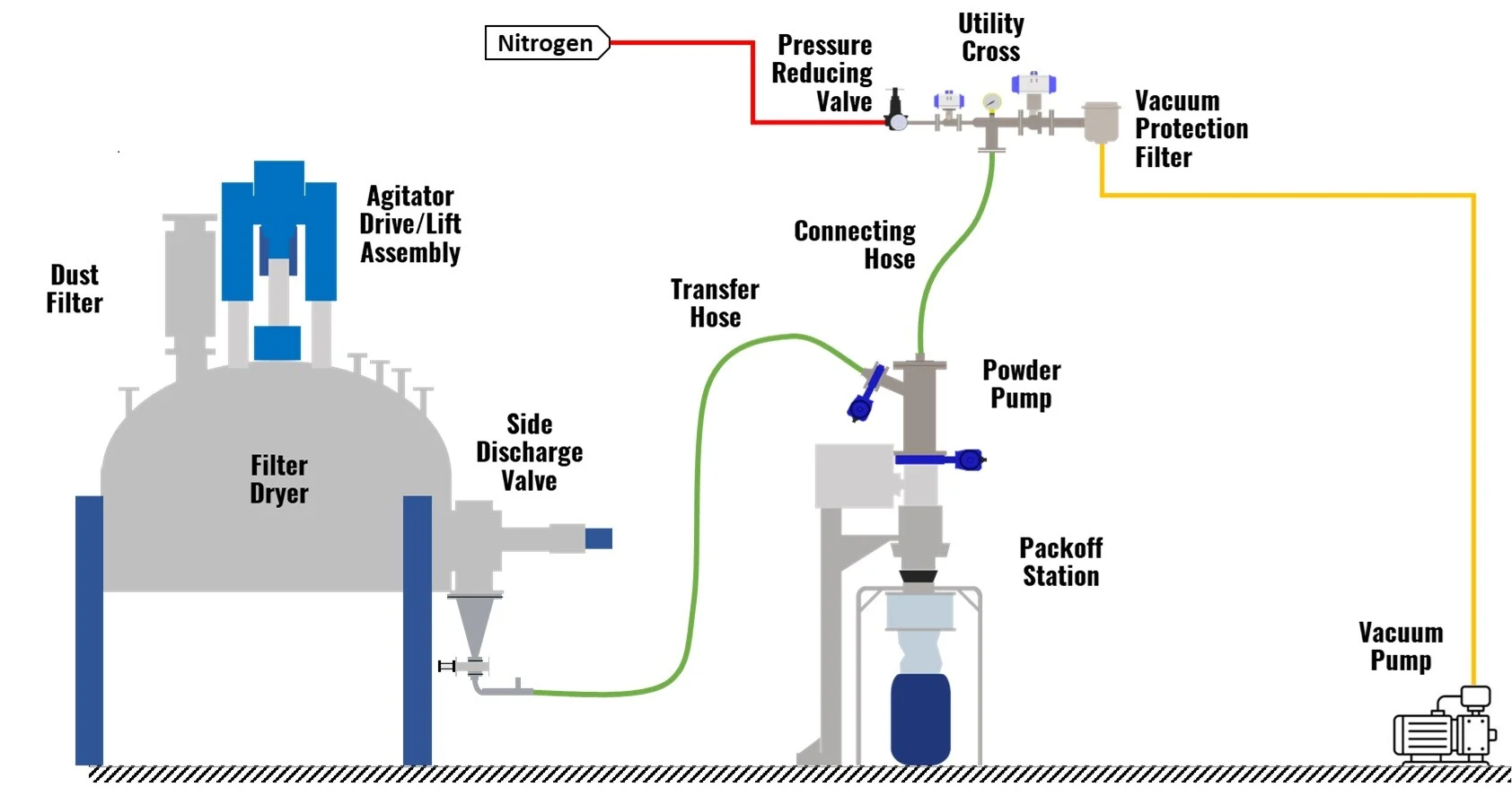
Liquid-solid separation is a critical process in many industries, including chemical, pharmaceutical, food, and environmental engineering. Efficient separation ensures product quality, process reliability, and operational safety. Among the various technologies available, agitated filters have emerged as a highly effective solution for these applications. By combining filtration, washing, and drying capabilities in a single unit, agitated filters improve efficiency and reduce operational complexity, making them an essential tool in modern manufacturing and processing facilities.
One of the primary advantages of an Agitated Filter is its ability to perform multiple operations within a single vessel. Unlike traditional filtration methods, which often require separate equipment for washing and drying, agitated filters integrate these processes into one enclosed system. This integration minimizes material handling, reduces the risk of contamination, and improves process safety. For industries dealing with hazardous or sensitive materials, the enclosed design protects operators while maintaining precise control over process conditions such as temperature, agitation, and vacuum.
Improved Filtration Efficiency
Agitated filters significantly enhance filtration efficiency compared to conventional filter presses or plate filters. The agitator in the system ensures that the filter cake does not compact unevenly, preventing channeling and improving liquid removal. This is particularly important for viscous slurries or suspensions with fine particles, which can be difficult to filter using standard methods. By promoting uniform cake formation and consistent filtration, agitated filters reduce cycle times and increase throughput, allowing manufacturers to maintain high production rates without compromising quality.
Effective Washing of Solids
In many industrial processes, washing the solid cake is crucial to remove impurities, residual reactants, or unwanted by-products. Agitated filters excel in this regard because the agitator continuously moves the solids, allowing wash liquids to penetrate the entire cake evenly. This uniform washing improves the purity of the final product while reducing solvent consumption and processing time. Industries such as pharmaceuticals and fine chemicals benefit greatly from this capability, as it ensures compliance with stringent quality and regulatory standards.
Controlled Drying Capabilities
Drying is an essential step in liquid-solid separation, especially for products sensitive to moisture. Agitated filters are equipped with jacketed vessels that can be heated using steam, thermal oil, or other heating mediums. The agitator ensures that heat is distributed evenly throughout the material, preventing localized overheating and product degradation. By combining drying with filtration and washing in a single vessel, agitated filters reduce the need to transfer materials between different pieces of equipment, lowering the risk of contamination and minimizing labor requirements.
Safety and Containment
Agitated filters offer enhanced safety features, particularly when handling hazardous, toxic, or pyrophoric materials. The closed-system design allows operations under vacuum or inert gas conditions, preventing exposure to harmful substances and reducing the risk of unwanted chemical reactions. Safety interlocks and automated controls monitor pressure, temperature, and agitation in real-time, providing additional protection for operators. This containment capability is a key advantage over open filtration systems, where operator exposure and environmental contamination are more likely.
Flexibility and Versatility
Agitated filters are highly versatile and can handle a wide range of materials, including viscous slurries, fine powders, and abrasive solids. Their adaptability makes them suitable for industries ranging from chemical synthesis to food processing and environmental treatment. Additionally, modern agitated filters can be customized with different agitator designs, filter media, and vessel sizes, allowing manufacturers to optimize the system for specific process requirements. This flexibility ensures that the equipment can accommodate new production challenges without significant modifications.
Automation and Process Control
Automation is another major advantage of agitated filters. Many systems are equipped with sensors and controllers that monitor critical parameters such as temperature, vacuum, and agitation speed. Automated systems allow real-time adjustments to maintain optimal operating conditions, improving reproducibility and consistency. Data logging and process monitoring capabilities also support regulatory compliance, particularly in industries such as pharmaceuticals and fine chemicals, where traceability and quality control are essential.
Cost and Efficiency Benefits
By integrating multiple steps into a single piece of equipment, agitated filters reduce the need for additional vessels, pumps, and manual handling. This consolidation leads to lower capital investment, reduced labor costs, and faster production cycles. Energy consumption is also minimized, as heating and vacuum systems can be applied efficiently within the same vessel. Overall, these efficiencies contribute to lower operating costs and a more sustainable manufacturing process.
In conclusion, agitated filters offer numerous advantages in liquid-solid separation, including enhanced filtration efficiency, effective washing, controlled drying, improved safety, and operational flexibility. Their integrated design, automation capabilities, and adaptability to different materials make them a valuable tool across a wide range of industries. By reducing contamination risks, optimizing process efficiency, and lowering operating costs, agitated filters continue to set the standard for modern liquid-solid separation technology.
Table of Contents

