



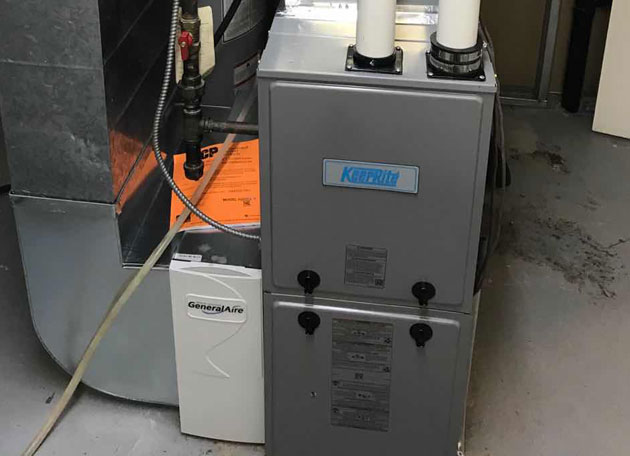
It’s simple to select a heater for your house. The items on the list below are things to consider when purchasing a furnace.
1. What Kind of Furnace Are You Looking For? Electric Or Gas-Powered?
The Gas Heater
Where gas is easily accessible. Using a gas furnace is always cheaper than one that runs on electricity. The negative of burning fuel is that fumes are produced. The fumes produced by well-maintained gas furnaces are contained in the exchanger and subsequently leave the building through an exhaust vent.For an emergency furnace installation in Toronto, call Cambridge Heating and Cooling Company, which is the best HVAC company in Canada
Always keep in mind that a gas furnace needs to be inspected by a trained specialist at least once every year. The expert would examine the furnace for cracks. Holes. Or leaks. Carbon monoxide can enter your home or place of business if there is a break or fracture in the furnace.
Using An Electric Furnace
Compared to a gas furnace. The electric furnace is more expensive. Positively. Because electric furnaces don’t use flames. They don’t produce carbon monoxide. Compared to a gas furnace. The electric furnace is safer and cleaner.
2. The Furnace’s Quality
The furnace’s quality affects how long and how well it will last. Long-term costs may lower if you choose a furnace brand with a reputation for excellence and dependability. Find out from your contractor which brand will suit your demands the best. Some businesses offer a free estimate for the purchase and installation. Make sure to research the permit requirements in your area before starting any furnace installation in Toronto work in your home
3. The Furnace’s Efficiency
The ague. Or annual fuel utilization efficiency. Ratings of gas furnaces are used to measure their efficiency. The ague ratings show how effectively the fuel is being used. A higher age rating often means less fuel is required to heat your home.
Higher-rated gas furnaces are more expensive than lower-rated ones. But they can end up saving you more money over time. The government established a minimum score of 78% in 1992. Prior to 1992. Many furnaces had an efficiency rating of roughly 60%.
The Mid-Efficiency Furnaces.
The term “induces draught furnace” or “non-condensing furnace” is also used to discrimen-efficiency furnaces. The mid-efficiency furnace provides efficiency ranging from 78% at the very least to roughly 80%.
High-Efficiency Furnaces.
Condensing furnaces and sealed combustion furnaces are other names for high-efficiency furnaces. The ague rating of high-efficiency furnaces can reach 96%. Some furnaces increase comfort and efficiency by utilizing a two-stage valve and an effective variable-speed motor.
4. Furnace Comfort Attributes
Many furnaces come with features that improve efficiency and comfort.
Features Of the Two-Speed Furnace.
Most of the time. The furnace can run at a low pace. Compared to a “single-speed furnace.” it enables for quieter operation for a longer period. Fewer start/stop cycles. Fewer draughts. And very little temperature variation is possible because of the longer run times.
Compared to the single-speed units’ four-degree temperature fluctuation. The temperature swing is only two degrees or such. Better circulation provided by the two-speed unit stops warmer air from rising and cooler air from settling down. The two-speed device maintains the house’s temperature more consistently.
B. Variable-Capacity Furnace Characteristics
Variable capacity furnaces offer a balance of comfort and efficiency. The variable capacity includes a motor that automatically adjusts air volume and speed to meet your needs. The var-cap furnace offers the best heating and cooling performance.
5. The Furnace’s Volume of Noise
Unfortunately. Unlike heat pumps and air conditioners. All furnaces do not come with a uniform sound rating system. However. Two-speed and var-cap systems typically function with minimal noise. For more information on this topic, please visit Cambridge Heating and Cooling or you can contact 416-750-4363
Table of Contents

