



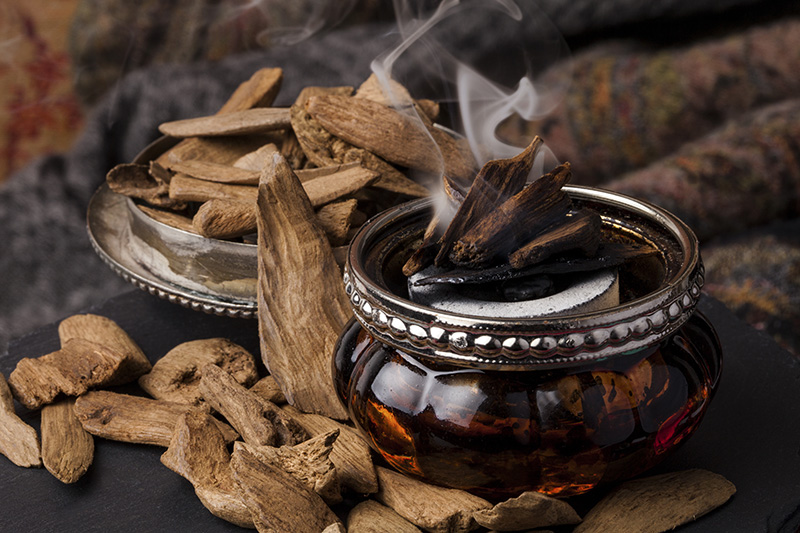
Ever heard about Bakhoor incense? The Arabic term for Bakhoor is “incense.” There are numerous ways to burn Bakhoor. In this post, we will examine all the various methods for burning Bakhoor and discuss some typical errors that individuals commit when burning Bakhoor.
Although in the ideal world of a Sheikh, one would anoint oneself with the oil. Second, burning oud chips captures the essence of the wood in a complete scent profile as opposed to using oud oil. However, fumigate one’s clothing, hair, and beard while standing in a tent over the embers of a Bakhoor burner.
Electric burners are available today, although charcoal in a bowl or an Arabian Mabkhara is still a useful method. Let us explore the method of charcoal for Bakhoor burning in this post.
Knowing Bakhoor Briefly
Wood chips known as Bakhoor are combined with other (natural) substances including sandalwood, natural resin, and essential oils after being soaked in perfume oil. Everybody can choose their preferred variety of Bakhoor because it is available in so many variations. The Middle East has a popularity for Bakhoor.
Most of the time, Bakhoor is utilised for relaxing reasons or at special events like weddings. Passing Bakhoor among visitors is a custom in the Arabian culture so they can smell one other’s hands, clothing, and hair. As essential to hospitality as pouring coffee and dates, it is thought that this.
Traditional Way to Burn Bakhoor with Charcoal
Burning Bakhoor is similar to burning incense made of natural resin. The best way to burn Bakhoor is in a Mabkhara, a tradition bakhoor burner, with a quick-light charcoal tab. You will need the Bakhoor, Mabkhara, and Charcoal discs materials initially to burn Bakhoor.
The Bakhoor burning procedure is listed below.
- Insert a charcoal disc of Charcoal in the Mabkhara (Incense burner)
- Apply flame to the disc with a matchstick or lighter until you notice sparks moving across the coal.
- The disc will eventually develop some grey soot-like ash on top, signalling that it is hot and ready.
- Now you may use tongs to lay a slice of Bakhoor on top of the disc and enjoy the fragrant Bakhoor.
- For a milder smell and less smoke, use a little.
- When finished burning the Bakhoor, put a ceramic dish over the Mabkhara to put out the coal disc. Only discard the coal when you are certain that it is fully cool.
You should use this charcoal to burn Bakhoor since the coal itself does not emit smoke. To perfume your home, use the rich, aromatic smoke that the Bakhoor emits.
Top Notes: Be careful to keep dogs, youngsters, and the Mabkhara with hot coal out of the way and out of reach. Be on hand to always oversee.
Common Mistakes to Avoid:
- You’ll get a scorching Bakhoor if you leave it on the coal for more than 20 minutes.
- The Bakhoor item should not be heated or burned as it is not combustible.
Using Electric Burner Method for Bakhoor
This is among the simplest and most practical methods for burning Bakhoor.
- Connect the electric burner.
- Atop the platter, place the Bakhoor.
- A piece of foil is typically advised since many varieties of Bakhoor melt and might be untidy.
- Unfortunately, you can’t move this till you unplug it after 15-20 minutes.
Common Mistake to Avoid:
If you leave the piece of Bakhoor on the plate for more than 20 to 30 minutes, it will begin to burn.
Without a Burner/Mabkhara, Burning Bakhoor
Burning Bakhoor does not necessarily need a Mabkhara. If you don’t have one, there are numerous methods you may extract your preferred aroma from those clay tablets (or wood chips).
Some hookah smokers may set their Bakhoor on the plate that surrounds the hookah head and light some weak charcoal on it. By doing this, they may avoid wasting a lump of hot coal and alter the odour of the space where they are smoking. You may also put fresh charcoal on this dish if you’d like. Therefore, if you have this choice, you can utilise it to burn Bakhoor.
Others can use an ashtray made of clay or pottery. If possible, stay away from inexpensive plastic ashtrays. The ashtray would be covered with many folds of aluminium foil. The aluminium foil would then be covered with burning coal. The Bakhoor would then be placed on top of the coal that was burning. It resembles a basic handcrafted Mabkhara in certain ways. Although it might not be as attractive or ornamental, it serves its purpose.
Aluminium foil is employed in the most recent technology as well (do you see a trend with the Aluminum foil here)? Some individuals would set the aluminium foil on the stove’s burner, light the flame, and as the metal foil heated up, they would place their Bakhoor on top and slowly allow it to burn. Again, it’s not the most attractive approach, but it works.
How do you Pick a Superior Bakhoor?
If you’re a beginner or have never used the Bakhoor, you must be careful to get high-quality Bakhoor chips.
The Bakhoor that is frequently sold in markets is frequently of substandard quality. Some sellers of Bakhoor claim that it includes a sizable amount of Agarwood/Oud; these two are expensive materials, therefore if you find Bakhoor that is less expensive, it either doesn’t include Oud or was made with Agarwood of extremely low quality.
However, some producers do respect the incense-making procedure and use premium Oud, incense, and natural perfume oils to create high-quality Bakhoor. Even though their items are more expensive than others on the market.
Quick Summary!
Burning Bakhoor is similar to burning natural resin incense. The best way to burn Bakhoor is in a Mabkhara with a quick-light charcoal tab. To start, light the charcoal tab with a match (make sure to do so on a fire-proof surface). When the charcoal has attained full combustion, it will glow red and be covered with grey soot. Place the tab in the Mabkhara using a pair of tongs, and then sparingly sprinkle some Bakhoor on top of the tab. The heat of the charcoal tab will cause the Bakhoor’s oils to evaporate, unleashing its unique, fragrant, and rich scents.
Table of Contents

