



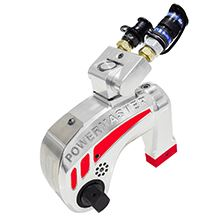
Industrial environments are not only hard-pressured environments that require strength. The fastening systems should also be able to provide accuracy, consistency and safety when subjected to extreme loads. Ranging from refineries to power plants, heavy-duty fastening tools are critical in ensuring that the joint integrity is not compromised at all costs. These tools are developed by an established industrial bolting tools manufacturer that has developed the tool to meet the test of conditions that challenge not only materials but also engineering.
Performance Standards in High-Load Environments
The heavy-duty fastening tools are designed to carry out the hard-duty operations to the standards of functionality, which ensure that the operation can be performed at a high level even in the case of high pressure and stress.
- Precision torque delivery
Proper application of torque will see to it that the bolts are tightened evenly through joints. This accuracy minimizes the distribution of stress that is uneven, which otherwise causes gasket failure or fatigue of bolts.
- Strength and durability of materials
These tools are made out of alloys of high-grade materials that do not deform easily under load. Durability will enable the equipment to work successfully without interfering with accuracy.
- Stability of a variety of fasteners
Massive industrial assemblies have many bolts that are required to work consistently. Strong clamping equipment will guarantee that there is consistency in all fasteners to minimize the chances of leakage or joint dislocation.
Safety and Control During Critical Operations
Safety in high-pressure applications: The tool performance is directly associated with safety. Controlled fastening reduces the risks to equipment and personnel.
- Reduced operator strain
High-end fastening equipment is created to address the high torque needs with the least amount of manual work. This saves the operators the physical burden and minimizes the possibility of handling errors.
- Managed load application.
Slow and steady transfer of a load eliminates abrupt loads that may cause damage to components. This is of particular concern when dealing with flanged joints or pressure vessels.
- Enhanced jobsite safety
Effective fastening equipment minimizes the chances of a bolt breaking or the rapid release of a joint. These tools ensure the prevention of accidents because of pressure loss or component separation.
Supporting Tools for Complex Joint Assembly
Most high-pressure jobs need more than the application of torque. Supporting machinery is important in proper alignment and in ensuring that it is well fastened.
- Efficient flange alignment
Before fastening is done, proper alignment is necessary. Aiding tools enable the technicians to place parts correctly, and they do not have to strain when tightening.
- Safety of separation and access to joints.
At times, maintenance and inspection activities demand regulated segregation of pressurized joints. Technicians are also able to work safely on equipment supplied by reputable flange spreader distributors that do not damage mating surfaces.
- Higher efficiency in maintenance.
Support equipment makes complicated assembling and disassembling easier. More rapid and secure maintenance decreases the downtime and enhances the level of operation.
Conclusion
The pressure of precise engineering, durability and design that are safety-oriented are combined in heavy-duty fastening tools. They are not only necessary in the demanding industrial environment due to their capability to provide consistent torque, facilitate controlled operation, and be used in conjunction with specialized joint-access tools. Companies such as Powermaster America LLC are among others that help in this reliability by offering engineered bolting solutions suitable for critical applications, which are in the industries where performance, safety, and accuracy are not negotiable.
Table of Contents

