



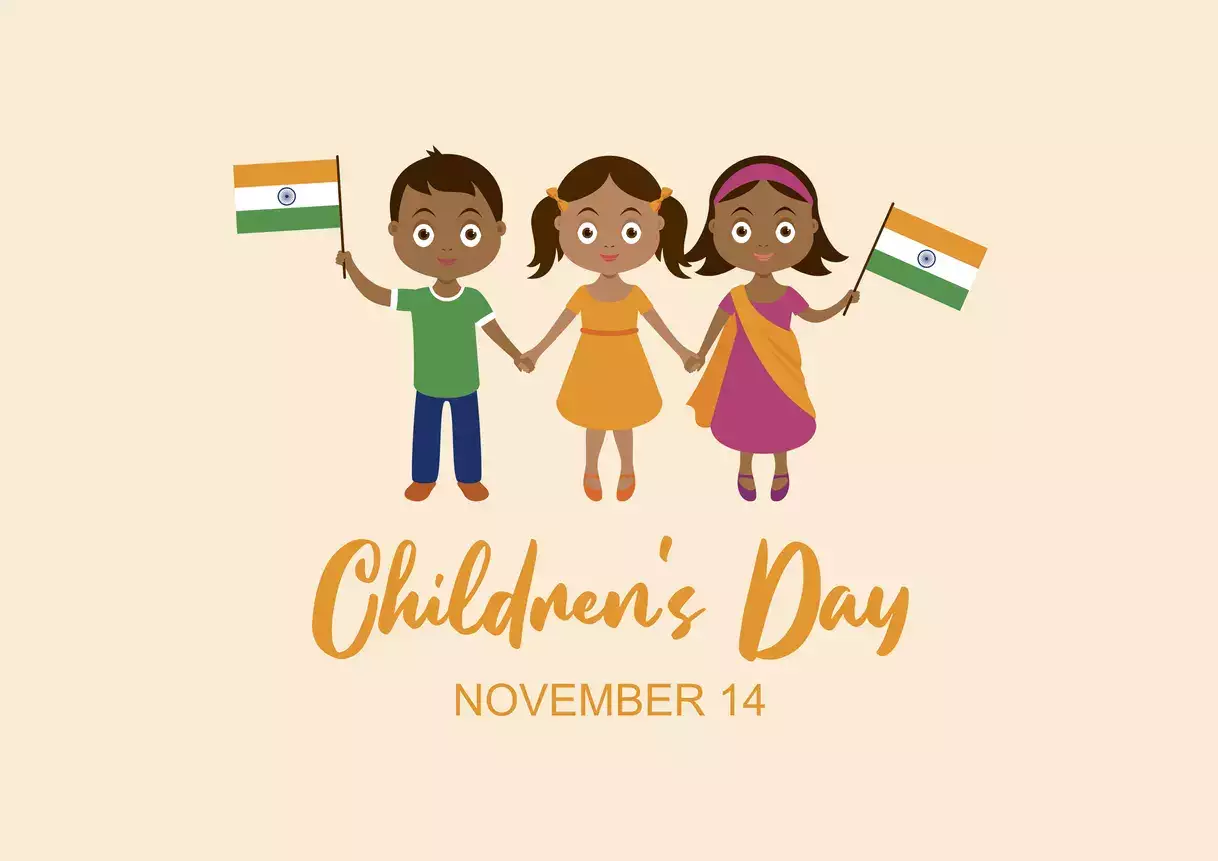
On November 14 of each year, India celebrates Children’s Day, also known as “Bal Diwas,” with much festivity. This day marks the birth of Pandit Jawahar Lal Nehru, India’s first prime minister. He was a cultural icon known as Chacha Nehru because of his love for children, and 14th November Children’s Day is dedicated to him.
Why is November 14 Celebrated as Children’s Day in India
This day is devoted to raising awareness of children’s rights, care, and education. Although Jawahar Lal Nehru passed away in 1964, the Indian parliament passed a resolution declaring the first Prime Minister’s birthday 14th November Children’s Day, overriding the United Nations’ declaration of November 20 as Universal Children’s Day. On November 14, 1889, Pandit Jawahar Lal Nehru was born, and he believed that children would be the country’s future inhabitants. He believed that today’s youth would create the India of tomorrow. Therefore, the future of the nation will depend on how we raise them.
In the beginning, India observed Children’s Day on November 20 in observance of the Universal Children’s Day proclaimed by the United Nations. To honour Pandit Jawaharlal Nehru’s legacy, a resolution was adopted by the Indian Parliament after Jawaharlal Nehru’s passing in 1964, designating November 14 as Children’s Day.
Significance of Children’s Day
Chacha Nehru was a passionate supporter of children’s education and consistently held that the advancement of a newly independent nation depended on the well-being of its youth. He thought that young people were a country’s true strength and the cornerstone of civilisation. Pandit Jawaharlal Nehru, a former prime minister, had a distinct vision for what Modern India should resemble and realised that he needed to set his dreams by creating solid pillars that would support the recently independent nation in the past.
How is 14th November Children’s Day Celebrated?
India observes Children’s Day in observance of Pandit Nehru’s birth anniversary. Schools and other educational institutions host a variety of celebrations, events, and programmes to mark the day with enjoyable and inspiring activities. Children receive presents, toys, and treats; in some schools, teachers even put up shows to amuse the children.
Contrary to common misconception, the day is not a gazetted holiday, but kids are nonetheless urged to attend class and participate in the festivities. This day is commemorated in educational settings including schools and universities with unique gatherings and events. To boost participation and educate kids about the rich historical past of the nation and the notable figures who were a part of it, events like quizzes, cultural activities, plays, fancy dress competitions, etc. are held.The celebration of Children’s Day begins with remarks about Pandit Nehru being read on stage. Then, children dress up as characters from a specific subject, such as Nehru or angels. Finally, they perform on stage, whether they are dancing, singing, or acting.
In addition to marking Children’s Day in schools or colleges, we as citizens may improve the lives of less fortunate kids. We can give away food, clothing, books, or anything else that will make them happy and demonstrate our appreciation for them. Parties and celebrations occur frequently, but we can have a significant impact by making even a small contribution to their needs.
Support an NGO this Children’s Day
Both education and other means can lead to a better life. It is a movement from darkness to light. People who lack knowledge get caught in poverty and underdevelopment cycles that last for generations. India has been independent for decades, yet it has yet to achieve a literacy rate of more than 90%. To ensure that all children in India receive an excellent education, the State and Central governments should prioritise it. The various Indian government ministries routinely support charities in order to incorporate a rising number of children in their educational programmes.
Given India’s population and geographic area, the government cannot educate every child on its own. In India, 17.7 million children are still not enrolled in school. The retention rate in schools remains abysmal, and many children drop out before the eighth grade. Due to the ingrained notion in Indian society that girls shouldn’t pursue an education because they will eventually be married off, education for women is far worse. And this 14th November Children’s Day, you can support a trustworthy NGO like Save the Children and help empower the girls of our country with education.
Table of Contents

